

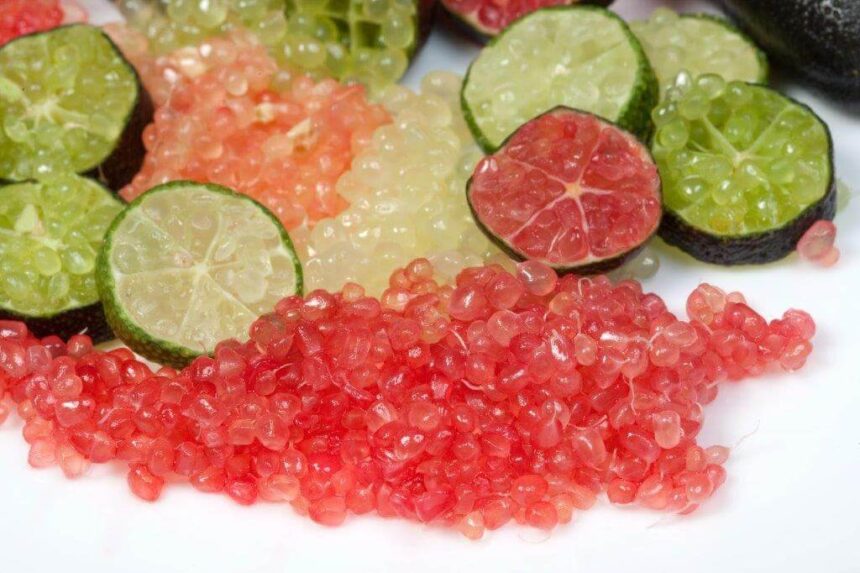
Finger lime (scientific name Citrus australasica) is a citrus species in the Rutaceae family, native to the rainforests of eastern Australia. The fruit is elongated like a finger (6-10cm), and inside it holds hundreds of small, round, separate juice vesicles that burst in the mouth just like caviar — which is why it’s also known as “citrus caviar.”
Origin and Scientific Classification
Finger lime grows wild in the rainforests of Queensland and New South Wales (eastern Australia) and is one of Australia’s oldest native “bush foods,” used by Aboriginal peoples as both food and traditional medicine for thousands of years. In the wild the tree can reach up to 10m tall, though it’s kept much shorter in commercial cultivation. It has long thorns (about 2.5cm) along its branches and produces small white or pale pink flowers. There are currently 8 officially registered finger lime varieties in Australia (Alstonville, Rainforest Pearl, Red Champagne, Pink Ice, and others), which differ mainly in skin color (green, yellow, pink, purplish-red), pearl color, and acidity level.
Nutritional Value of Finger Lime
According to nutritional studies, every 100g of finger lime contains roughly 25-30 calories, 3g of fiber, and notably 80-88mg of vitamin C — nearly 98% of the recommended daily vitamin C intake for adults. The pearls are also rich in phenolic compounds and flavonoids, giving them very high antioxidant capacity — pink/red-pearled varieties in particular show an ORAC antioxidant score many times higher than common yellow lime.
| Nutrient (per 100g) | Finger Lime |
|---|---|
| Energy | ~25-30 kcal |
| Vitamin C | 80-88mg (~98% of daily needs) |
| Fiber | ~3g |
| Water | ~90% |
| Other minerals | Potassium, magnesium, calcium, folate (trace amounts) |
What Is Finger Lime Used For?
Unlike common lime (mostly squeezed for juice), finger lime is used whole, as pearls, sprinkled directly onto dishes — creating a striking visual accent while delivering a milder, brighter citrus tang than yellow lime along with a fresh, fragrant aroma. This makes it especially popular for:
- Raw seafood dishes (sashimi, oysters, ceviche) — the gentle acidity lifts the briny flavor without overpowering the seafood’s natural sweetness
- Premium cocktails and mocktails — the pearls float on top of the drink, looking beautiful and giving a light “pop” with every sip
- Desserts and pastries — for garnish and a balancing tartness against sweetness
- Plating in fine-dining restaurants
Finger Lime vs. Regular Yellow Lime Comparison
| Criteria | Finger Lime | Yellow Lime |
|---|---|---|
| Shape | Elongated, finger-shaped | Round |
| How it’s used | Whole pearls, sprinkled | Squeezed for juice |
| Taste | Bright, milder tartness | Sharper, more sour |
| Vitamin C/100g | 80-88mg | ~53mg |
| Availability in Vietnam | Still fairly new and rare | Common, widely available |
Can Finger Lime Be Grown in Vietnam?
Yes. Although native to Australia, finger lime has been successfully trial-grown and fruited in several tropical regions of Vietnam, including Ben Tre — an area with well-draining alluvial soil and warm year-round climate that closely resembles the tree’s natural habitat in Australia.
How to Grow Finger Lime
1. Choosing a Seedling
It’s best to start with a grafted/air-layered F1 seedling that has already been reliably propagated, rather than growing directly from seed. The reason: finger lime is largely a monoembryonic species — a tree grown from seed is a hybrid that won’t retain the true characteristics of the parent plant, and it can take over 10 years before it fruits. A grafted seedling dramatically shortens this timeline while preserving the true variety. The seedlings we currently supply are about 6 months old (300,000 VND per tree) — already past the most fragile early stage, giving a high survival rate once replanted. 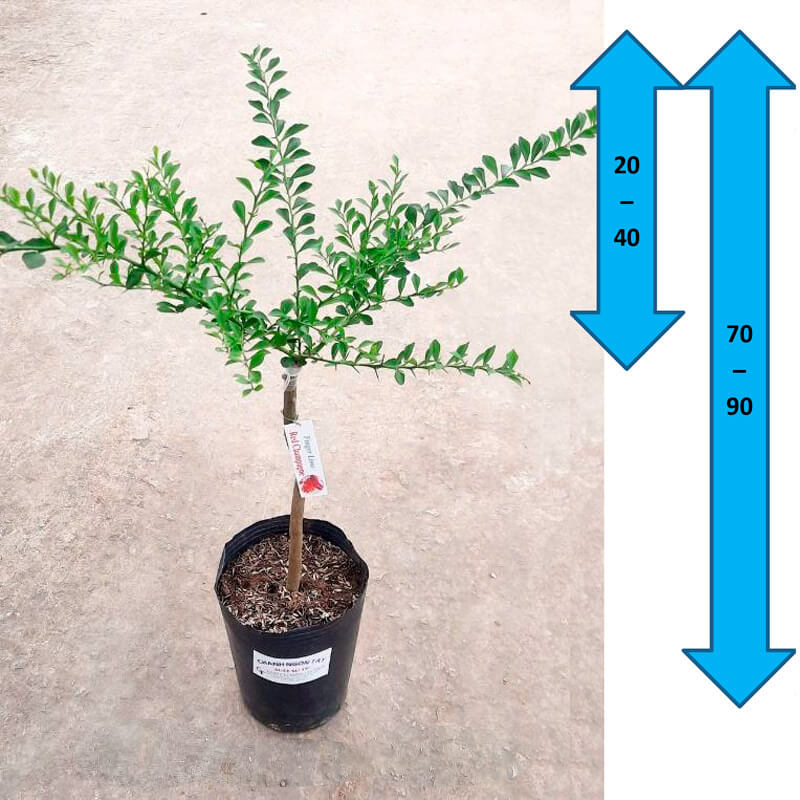
2. Soil and Light
Loose, well-draining soil with a slightly acidic to neutral pH (around 5.5-6.5) works best. The tree needs at least 6 hours of direct sunlight a day to grow well and flower consistently.
3. Watering
Keep the soil evenly moist but avoid waterlogging — finger lime is quite sensitive to prolonged standing water, which easily causes root rot. Deeper, less frequent watering is better than frequent shallow watering. 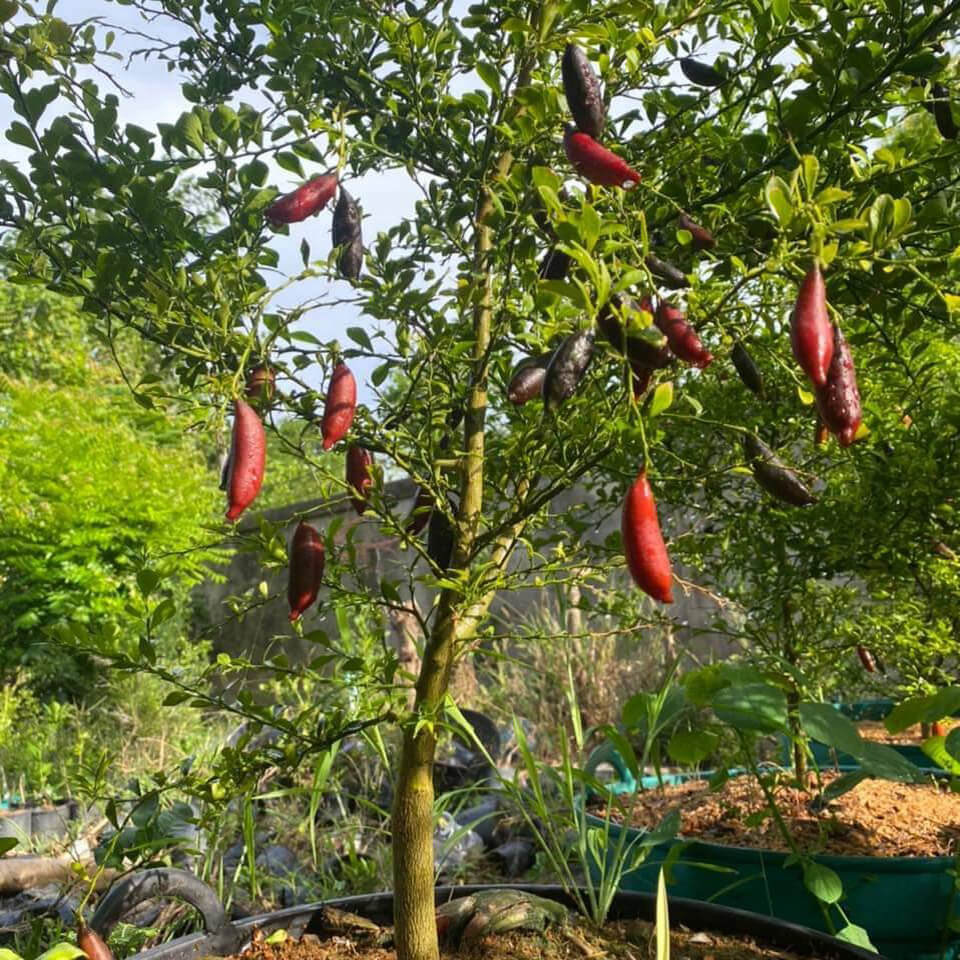
4. Fruiting Timeline (Real Data From Our Farm)
This is the question most growers ask, and one that’s rarely answered clearly anywhere else:
- From planting the seedling to the first fruit: about 4-6 months. Note this is just the first few “trial” fruits, not yet a regular harvest.
- From flowering to harvest (the regular cycle afterward): about 5.5-6 months.
These two milestones are different — the first is the “first-ever fruit,” while the second is the recurring cycle once the tree has matured.
5. Pests and Diseases to Watch For
As with other citrus trees, watch out for mealybugs, red spider mites, and root fungus (especially in poorly-draining soil). On the plus side: finger lime has been noted to show notably better resistance than many other citrus varieties to citrus greening disease (HLB/Huanglongbing) — one of the most destructive diseases affecting citrus crops.
How to Store Finger Lime
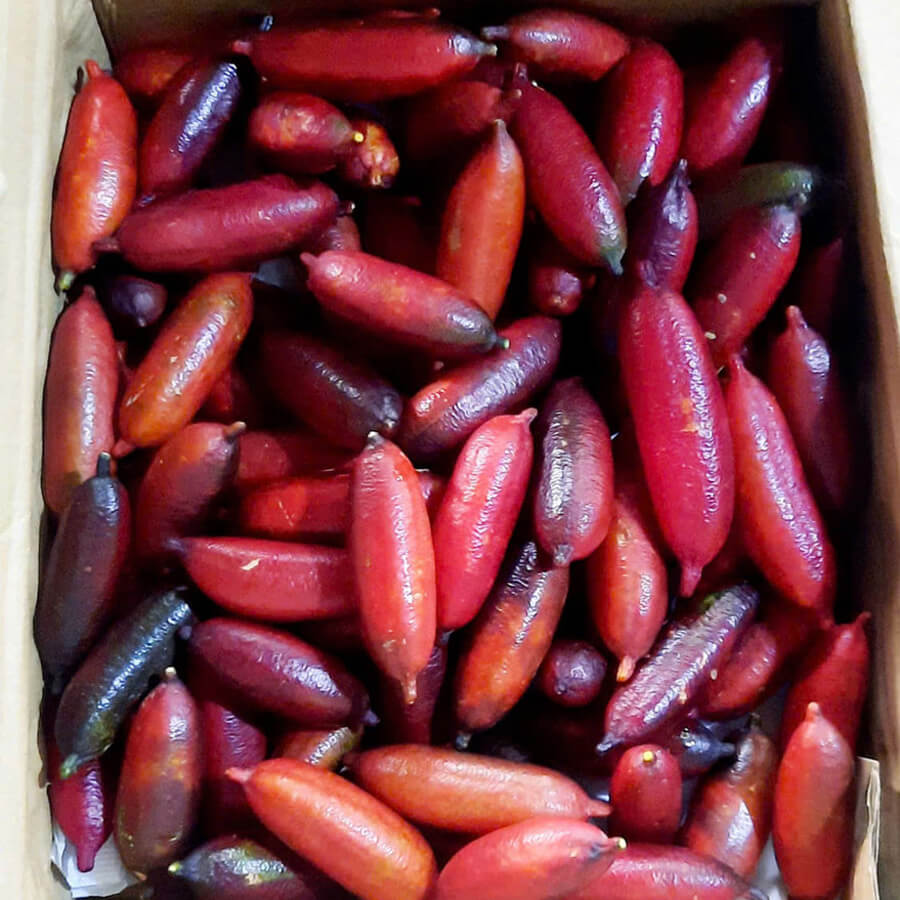 Freshly harvested fruit should be kept in the refrigerator, where it stays at its best for about 3-4 weeks.
Why a True F1 Seedling Is Worth the Investment
You’ll find finger lime seedlings at very different price points on the market. That price gap usually comes down to 3 factors: (1) whether the tree is genuinely a verified F1 variety or just an unverified seed-grown plant, (2) whether there’s a 1-to-1 replacement warranty if the tree fails to thrive, and (3) whether ongoing technical support is provided throughout the growing process, or the seller simply disappears after the sale. For first-time growers, these 3 factors matter far more to your tree’s survival and fruiting success than a cheaper upfront price.
Where to Buy Finger Lime or Seedlings
See current pricing for fresh fruit and F1 seedlings, plus ordering and nationwide delivery information, on the Finger Lime homepage.
Frequently Asked Questions
How long after planting does a finger lime seedling bear fruit? The seedlings we supply are already about 6 months old (300,000 VND per tree). After replanting, they typically produce their first fruit within another 4-6 months (just a few fruits at first, not yet a full harvest). From the following season onward, each cycle from flowering to harvest takes about 5.5-6 months. What is “chanh ngón tay” called in English? It’s called “finger lime” in English, with the scientific name Citrus australasica. Do you need to peel finger lime before eating it? Not necessarily. The pearls inside are the most commonly used part (cut the fruit in half and gently scoop them out), but the skin is edible too — it’s rich in fragrant essential oils and can be used to add extra flavor to a dish, similar to how lime or orange zest is used in cooking. Can finger lime be grown from seed? It can, but it’s not recommended — seed-grown trees usually don’t retain the parent plant’s true characteristics and take a very long time to fruit. A grafted or air-layered seedling is the better choice for predictable timing and quality. Is the entire finger lime edible, and is any part of it toxic? Both the pearls and the skin of finger lime are edible and safe. The skin is rich in fragrant essential oils and is sometimes used to enhance flavor, while the pearls are the most commonly used part thanks to their beautiful appearance and signature bright tartness.